Adhesive Bonding vs Welding: An age-old choice
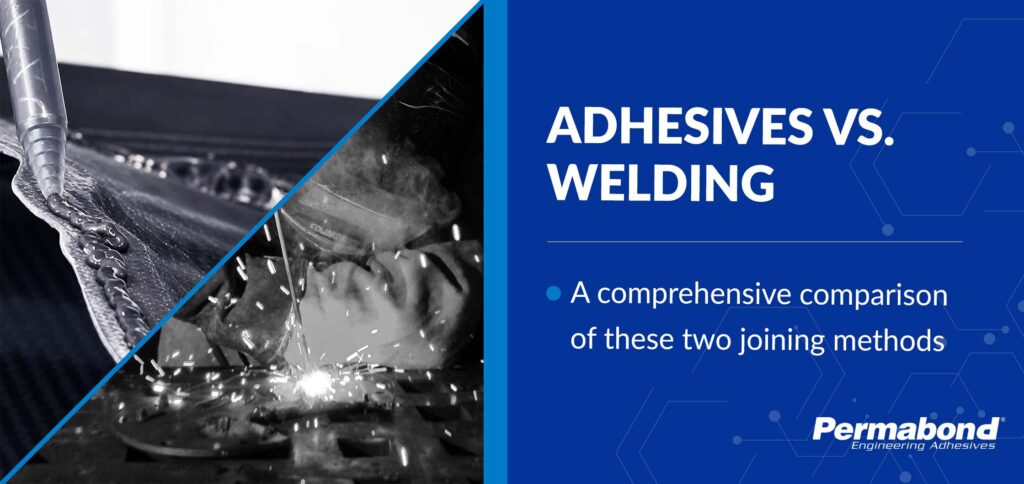
A common question that we encounter in the adhesives industry is “why should I use an adhesive instead of welding?” While both methods are age-old behemoths in the world of joining – welding has existed in some form or other as a binding method since around 3000BC, while adhesives are even older – welding is sometimes more trusted by engineers and manufacturers in industry. As humans, we tend to stick with the tried and true – what we know and trust – and welding remains a very reliable method of joining today.
This article isn’t going to be a simple ‘welding is bad, adhesives are good’ piece that you might otherwise expect from a manufacturer of adhesive products. The reality is that both welding and adhesives have their uses, their pros and cons, areas where one is preferable to the other. We will try to compare the two approaches fairly to give you a better understanding of when to use either method.
Welding – an ancient, evolving practice
As I mentioned earlier, welding has been around for thousands of years. Early Egyptians and Sumerians started joining metals together using heat and pressure, a process known as forge welding. This eventually became widespread and was the only welding method used until the end of the 19th century. Most welding techniques today, however, are based on arc welding – the use of electricity to heat and melt metals before joining and cooling them.
Types of modern welding
There are several different kinds of welding that are used in modern industry. We’ll briefly cover these below:
MIG Welding (Metal Inert Gas/GMAW)
How it works: A continuously fed wire electrode melts to form the weld, while an inert or semi-inert shielding gas protects the molten metal.
Advantages
- Fast welding speeds
- Easy to learn
- Highly automatable
- Excellent for production environments
Common applications
- Automotive manufacturing
- General fabrication
- Structural steel
- Sheet metal
TIG Welding (Tungsten Inert Gas/GTAW)
How it works: Uses a non-consumable tungsten electrode to create the weld arc. A filler metal is added separately if required.
Advantages
- Extremely clean and precise
- Excellent end appearance
- Easier to control
- Ideal for thin materials
Common applications
- Aerospace
- Medical equipment
- Stainless steel fabrication
- Aluminium components
- Food processing equipment
Laser Welding
How it works: A focused laser beam melts the material to produce a narrow, precise weld.
Advantages
- Very high precision
- Minimal distortion
- High speed
- Easily automated
- Small heat-affected zone
Common applications
- Electronics
- Medical devices
- Automotive manufacturing
- Aerospace
- Battery production
Resistance Spot Welding
How it works: Electrical current passes through overlapping sheets while electrodes apply pressure, creating heat that forms a weld nugget.
Advantages
- Extremely fast
- Highly repeatable
- Easily automated
- No filler material
Common applications
- Automotive body assembly
- Appliances
- Metal cabinets
- White goods
This is the process structural adhesives most commonly complement or replace in vehicle body construction.
There are many other types of welding, but these four tend to be the most commonly used in industry today.
Benefits of welding
Welding offers many advantages that make it still highly popular in industry today. Its standout features include:
- Long-established, proven method of joining. Welding has stood the test of time. It has been used for thousands of years to join metals together.
- High trust and confidence. Engineers and the wider public trust welding as a reliable way of joining parts together. Welded joints are seen as strong and permanent.
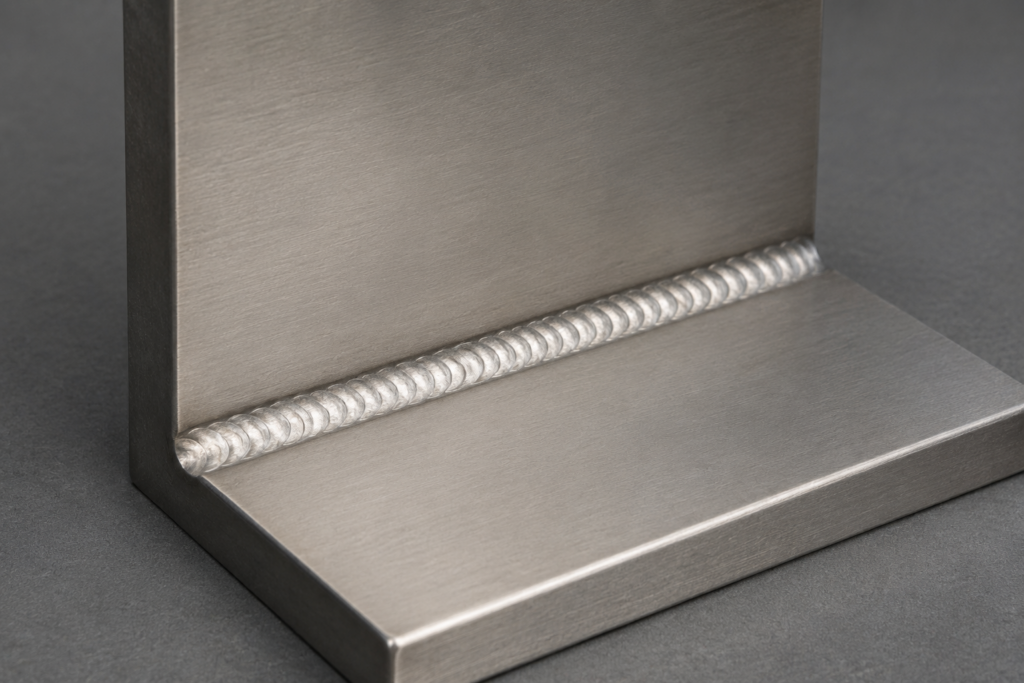
- Works on butt and other simple joint geometries. Welding is ideal for bonding metals that are in a butt joint (L-shape). Adhesives, on the other hand, don’t tolerate this type of joint well.
- Creates a continuous structure. Welding effectively makes two metals become one, with nothing in between them. This is ideal for maintaining electrical and/or thermal conductivity between parts.
- Provides optimized temperature resistance. Especially if the weld has joined identical substrates, (like steel to steel) the joint will be well equipped to handle high or low temperature extremes.
Drawbacks of welding
- Requires training and certification. Welding is a skill that requires proper training and certification in order to do professionally. This means that if you need welding done, especially on a regular basis, you’ll need to find (and pay) someone qualified to do it.
- Requires equipment. Likewise, welding also requires a welding machine, safety gear, a workstation, gas etc. These all cost money, and heavy duty industrial welding gear can be expensive.
- Presents hazards. Welding carries inherent risks. Since it involves sparks, immense heat and often gas, welding is a fire and explosion risk. This means it can’t be carried out in ATEX areas (European legislation) or anywhere where there is a risk of fire or explosion.
- Requires space. Welders need space to work. Unlike with an adhesive, for example, you couldn’t weld plumbing pipes together very easily under a sink.
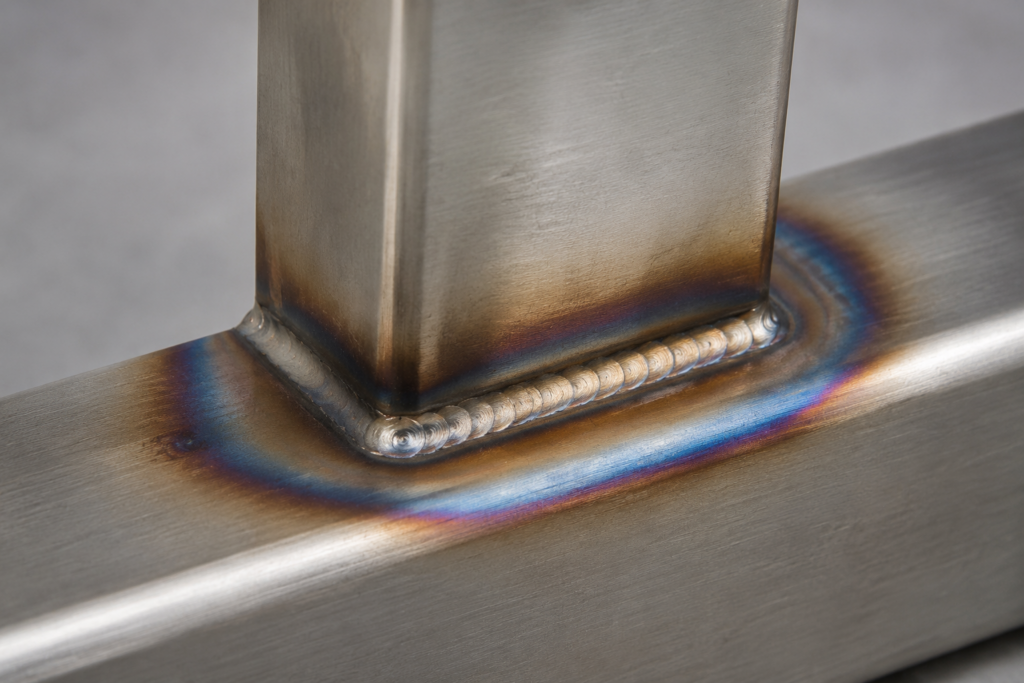
- Can cause tarnishing or distortion. Some metals, particularly stainless steel, can be affected visually by welding. Exposure to the very high heat from welding can cause the metal’s surface to oxidize and discolor, leaving an unsightly finish to your product.
- Limited substrate compatibility. Welding is generally only suitable for joining metals to metals, or plastics to plastics. You can’t weld metals to plastics or composites. Even welding dissimilar metals together (like aluminium to steel) can be a challenge, because individual metals have different melting points. In the case of direct welding aluminium to steel, the aluminium would melt away before the steel even began to get hot.
- Concentrates stress at the weld area. Welding focuses physical loads, forces, and vibrations onto tiny, localized rigid points, such as the edges of a bead or small weld nuggets. This creates high stress concentration peaks and fatigue risks.
- Hard to form a complete seal. Pinprick holes in welded joints make it difficult to create a 100% seal against liquids and gases. Further processing may be required.
Adhesives – even older than welding!
Welding has a very long history, but adhesives go back way further – Neanderthals were using birch bark tar as an adhesive for tools and hunting equipment 200,000 years ago! The first commercial glue manufacturing plant was founded in the Netherlands in the late 1600s, with modern adhesives gaining advent in the second half of the 19th century and continuing into the 20th century.
As a manufacturer of industrial adhesives for over 60 years, Permabond produces a wide variety of glues that vary in their chemistry, technology and substrate compatibility. From epoxy adhesives to structural acrylics, cyanoacrylates (also known as superglue) and adhesives that cure using UV light, adhesives cover a broad spectrum depending on the nature of the application and parts to be bonded.
Adhesives can bond a wide variety of materials including metals, plastics, composites, rubbers, ceramics and many more. They’re also well suited to bonding dissimilar materials together, for example metals to plastics.
Benefits of adhesives vs welding
- No extensive training needed. Unlike welding, bonding with adhesives requires minimum training and expertise. A certification or professional qualification is not required to use adhesives in industry.
- Much safer to use. While basic PPE is highly recommended when using adhesives, most do not pose a fire or explosion risk. As a result, they can safely be used in ATEX areas. Good ventilation is still important (as with welding) to vent out any fumes.
- Distribute stress evenly. Adhesives distribute stress over the entire bond area. This leads to better overall structural integrity, as well as impact and vibration resistance.
- Can bond dissimilar substrates. Adhesives can bond metals to plastics, plastics to composites, etc. They also excel at bonding different alike materials together – for example aluminium to steel. However, some adhesives are better than others at doing this. Differences in thermal expansion and contraction between substrates need to be considered, with the right adhesive selected that can handle any stress at the bond site as a result of this.
- Can be done ad-hoc and in small spaces. Adhesive bonding doesn’t always require workstations or extensive space, particularly for small jobs.
- Often provide a cleaner, nicer-looking finish. Adhesive bonding, when done well, often leaves no visible trace. Unlike welding, it doesn’t tarnish the substrate surface.
- Form a complete seal against liquids and gases. Many adhesives form a complete seal against liquids and gases.
Drawbacks of adhesives vs welding
- May require joint redesign. Modern structural adhesives are capable of achieving exceptionally high bond strengths. However, replacing a welded joint with an adhesive is not always a simple like-for-like substitution. If the joint has been designed specifically for welding, it may not be suitable for adhesive bonding without modification. By considering adhesive bonding during the design stage and optimising the joint geometry, comparable – or in many cases even greater – joint strength can often be achieved.
- Adhesives need time to fully cure. Welding provides more or less immediate strength development. Once metals are cooled, a welded item can be handled and used for its final purpose. Many adhesives, on the other hand, require several hours to reach full strength. Fixtures or clamps are also often required to achieve this. Cyanoacrylates and UV-curing adhesives, however, cure and reach full strength rapidly.
- Temperature limitations. Most adhesives based on organic chemistry (such as Permabond’s and those of many other manufacturers) cannot withstand very high or low temperatures. A welded steel joint, on the other hand, has no such issue.
- Surface preparation is often needed. To achieve a strong, durable bond, the surfaces to be bonded often need to be cleaned, abraded and primed before bonding. Substrates such as steel, copper and aluminium as well as many plastics and composites fall into this category.
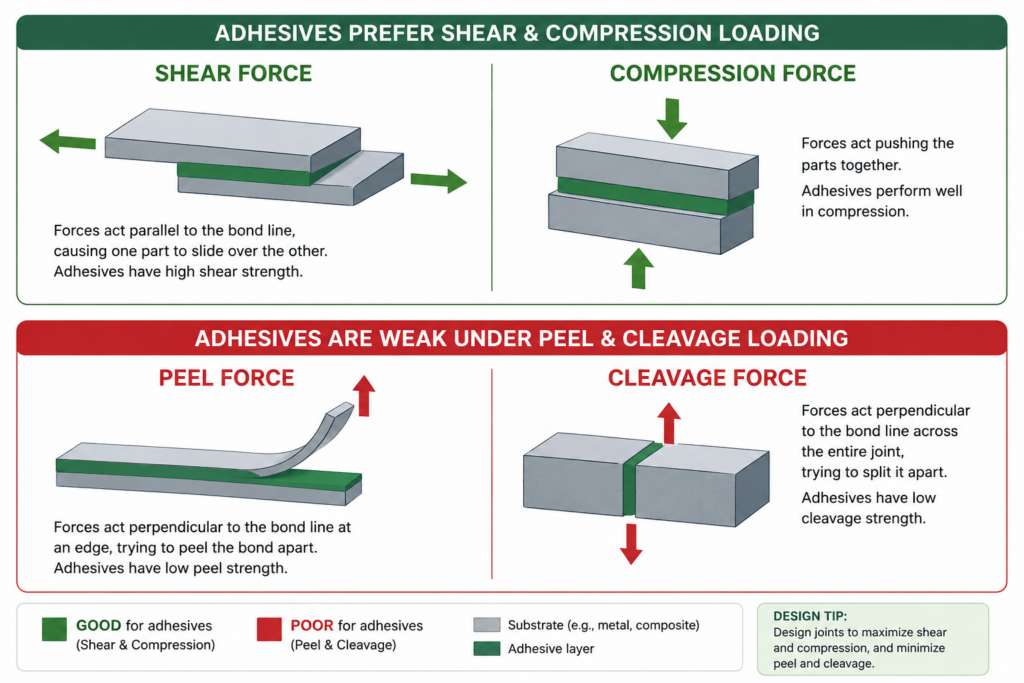
- Joint design is more important. Adhesives work best when kept in shear or compression, and don’t do well when faced with peel or cleavage forces (see image below.) With welding, joint design is much less of an issue.
Adhesives vs Welding – Which method is better?
As you can see, when comparing adhesives vs welding neither option is inherently ‘better’ than the other. Both methods have their pros and cons, and which one you use depends heavily on your application and design possibilities. While adhesive bonding offers significant advantages in joining dissimilar substrates, distributing stress, and reducing workplace safety risks, it also introduces considerations such as cure time, surface preparation, and the right joint design. For this reason, the choice you make ultimately comes down to what best meets the mechanical, manufacturing, and environmental requirements of your application.
FAQs on adhesives vs welding
Below are some questions we are frequently asked about using adhesives vs welding.
-
Can glue really be as strong as welding?
Yes, in many cases glues can be as strong as welding. Modern industrial adhesives are not the same as the typical household glues you may be familiar with. They are designed to provide very high structural strength and even stress distribution across the entire joint.
-
Why use adhesive bonding instead of welding?
One of the main advantages of adhesive bonding vs welding is that it requires no formal training or qualifications – almost anyone can do it. It also requires no special equipment, carries fewer safety risks, is ideal for bonding dissimilar materials together and allows greater design flexibility and choice of substrates.
-
Is adhesive bonding suitable for structural applications?
Adhesive bonding is suitable for many structural applications. Adhesive chemistries such as epoxies, structural acrylic adhesives and polyurethanes have high shear strength, spread stress evenly across the joint and are suitable for bonding composites, plastics and thin metals without causing heat distortion.
-
Is welding or adhesive bonding better for aluminium?
You can both weld and bond aluminium with adhesives, but adhesives present a simpler choice. In both cases, aluminium’s surface oxide layer is an issue and needs to be removed first. To weld aluminium, specific methods such as TIG or MIG should be used, and very careful heat management is required in order to avoid burning holes in the metal. Welding aluminium to other metals such as steel is also notoriously challenging due to the differential melt points of the metals. Adhesives, on the other hand, are more straightforward – once the aluminium surface has been prepared, many adhesives will bond very well to it. Bonding other metals to aluminium is also not a problem.
-
Can adhesives withstand high temperatures?
Most organic adhesives cannot withstand temperatures higher than 120°C (250°F). However, Permabond manufactures many adhesives that can comfortably withstand temperatures over 200°C (390°F). Any temperatures above 300°C (570°F) however will degrade most organic chemistry adhesives.
-
How long do structural adhesive bonds last?
When correctly specified, applied, and cured, structural adhesive bonds will last for many years, often matching or exceeding the lifespan of the substrates they join.
-
Can adhesive bonding reduce corrosion?
Yes, adhesives can reduce corrosion by acting as a seal that prevents moisture, dirt and air from getting into the joint. Adhesives also act as a conductivity barrier between metals which, when properly applied, can help to prevent galvanic corrosion.
If you have any questions about choosing between adhesive bonding and welding or to discuss your application with us, please get in touch!

Permabond will help you select the right adhesive for your application.

Permabond products are sold through distributors worldwide.

Permabond is an ISO QMS Certified company.