

Permabond’s anaerobic adhesives & sealants range covers an extensive line of products. This includes threadlockers, threaded pipe sealants, FIP (Form in Place) gasket makers, and retaining compounds.
Anaerobic adhesives are single-component liquid resins (typically composed of dimethacrylate esters) that stay liquid when in the open, exposed to air. Even once applied to the surface of a material, they will remain liquid. In this way they differ from cyanoacrylate adhesives, which typically begin to polymerize upon contact with trace amounts of moisture present on most surfaces.
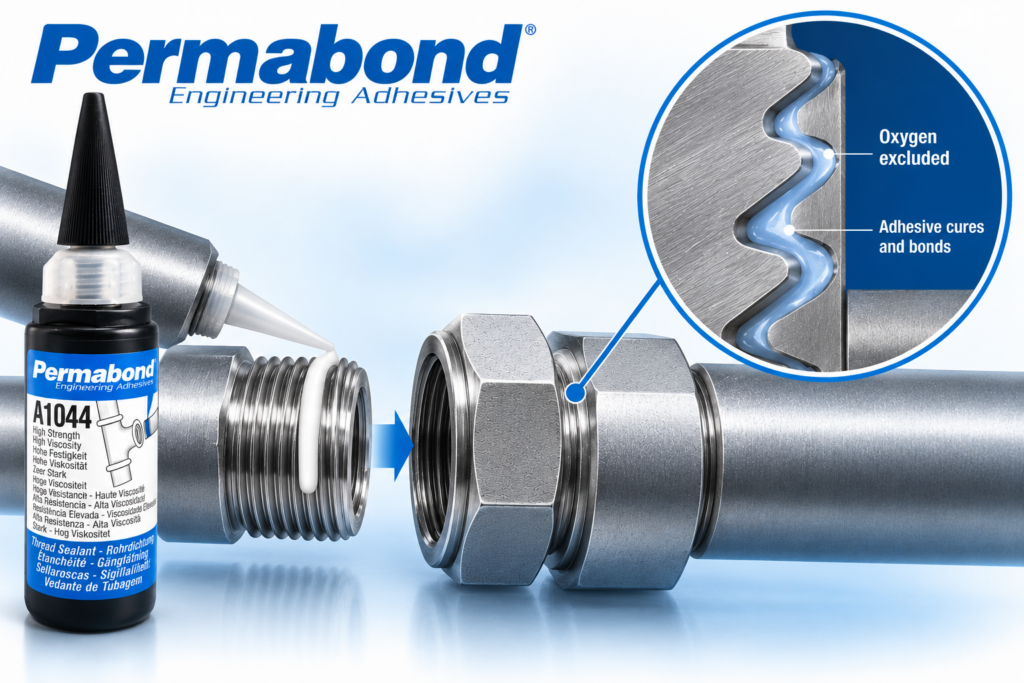
In order to cure, anaerobic adhesives require two things: the presence of metal, and the absence of oxygen. This is why they are so effective at sealing threaded metal pipe joints, for example – once joined, the closely fitting metal threads restrict oxygen exposure, allowing the adhesive to polymerize and form a seal.
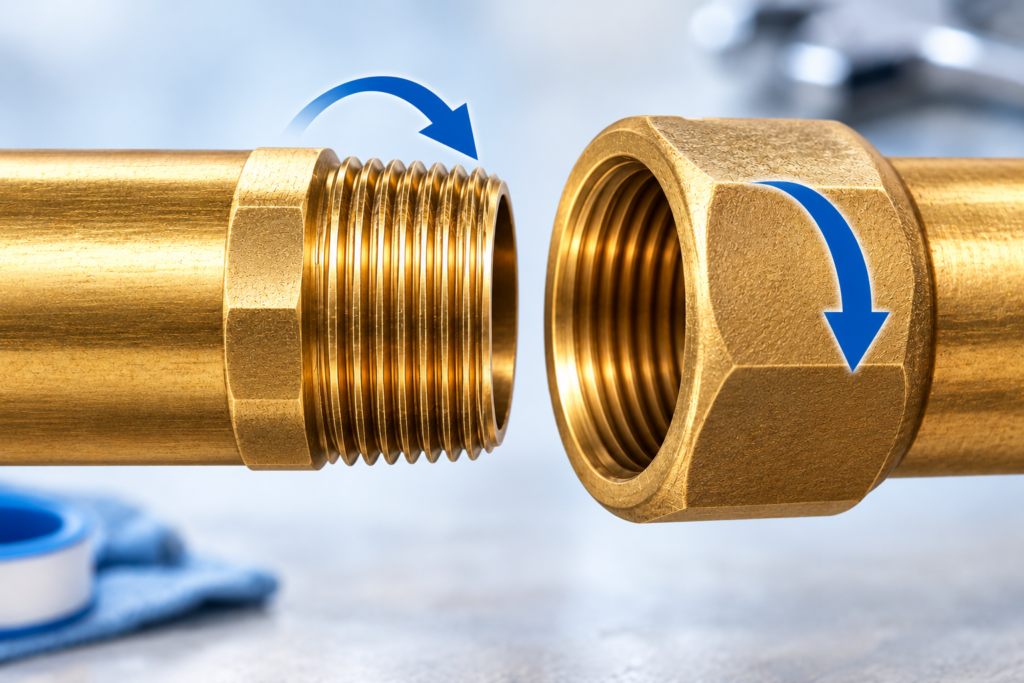
However, there is a slight caveat here – the kind of metal being bonded has an effect on the ability of an anaerobic adhesive to cure, and how quickly it does so. How effectively a metal is bonded using an anaerobic adhesive or sealant depends on how active its surface is (see our guide to anaerobic curing considerations).
Not all metals promote anaerobic curing at the same rate. Copper has a particularly active surface, with copper alloys such as brass also generally curing very quickly. Other active metals, like mild steel and iron, also cure quickly anaerobically, although typically at a slower rate than copper or brass. Passive metals, such as stainless steel and aluminium, have less reactive surfaces (often due to an oxide layer present) and therefore tend to cure more slowly, sometimes requiring an activator to achieve the desired cure speed.
| Metal activity | Examples | Effect on anaerobic curing |
| Highly active | Copper, brass | Generally promotes very rapid curing, often faster than other metals |
| Active | Mild steel, iron | Readily supports anaerobic curing, but generally less rapidly than copper |
| Passive / less active | Stainless steel, aluminium, zinc-plated surfaces | Generally slower curing; an activator may be beneficial |
Does this mean you can’t use an anaerobic adhesive or sealant to bond stainless steel or aluminium? Not at all! We’ve developed products that allow even the most passive metals to be bonded effectively with anaerobic adhesives. Our anaerobic activators can also enable curing on certain non-metallic substrates, including glass and some plastics, although material compatibility must be considered.
Permabond A905 or Permabond ASC10 can be applied to suitable inactive surfaces before bonding. These products deposit chemical initiators onto the surface, promoting faster and more reliable curing of anaerobic adhesives and sealants.
When bonding plastics this way, however, particular care should be taken, as some materials are susceptible to stress cracking when exposed to an uncured adhesive. Compatibility testing is therefore recommended before use.

There are four basic types of anaerobic sealants & adhesives, namely:
Within each type of application, products vary by strength, temperature resistance, set speed, viscosity, and gap fill. Our anaerobic adhesives and sealants selector guide can help you narrow down the right grade for your application.
Retaining compounds are a type of anaerobic adhesive designed to be used on cylindrical metal joints. They can replace mechanical joining methods such as keyways, interference fits or shrink fits. They tend to be very strong, offering higher bond strength than threadlockers and thread sealants. Typical applications include securing bearings into housings and bushings onto shafts, gears and pulleys.
Benefits of using a retaining compound over mechanical joining methods include 100% metal to metal contact (mechanical methods often result in only around 20% surface to surface contact) which results in a greater load bearing capacity. They avoid heat-based processes and can extend the lifespan of the components.
If you’re looking for an anaerobic retaining compound, Permabond HM162 is a good choice. It’s medium-viscosity and forms a very tough bond between metal parts.
Permabond A1046 is another excellent choice and one of our bestselling products. Offering gas approval and drinking water compliance, A1046 provides a very strong bond and readily withstands stress from vibration, impact and movement. Permabond HH040 is another strong option, offering high viscosity, excellent shear strength and superior environmental resistance. Permabond HH040 Pure is a similar product, approved for contact with drinking water.
Threadlockers are a type of anaerobic adhesive designed to lock in threaded parts, for example screws, nuts and bolts. Threadlockers help these parts to stay in place and prevent loosening from vibration, impact and thermal expansion and contraction. They also help to prevent corrosion forming between the two metal surfaces. Threadlockers outperform and are more cost-effective than alternative locking means such as lock washers, locking threads, and studs.
Permabond has a full range of anaerobic threadlockers. A very large range of available viscosities spans from very low viscosity wicking grades for post-assembly sealing and weld porosity sealing, to high viscosity for large nuts and bolts. Permabond threadlockers are available in permanent and removable grades as well as high temperature-resistant grades. For more detail, see our guides to anaerobic threadlockers and what threadlocker colors mean.
Threadlockers are used throughout various industries. Permabond has a variety of approvals and specifications here, including military specified grades, NSF/ANSI 61 and WRAS-certified products for drinking water.
Permabond HM129 is a high-strength, rapid-curing threadlocker that is ideal for permanent assembly, whereas Permabond A1042 is perfect for threadlocking where future disassembly and maintenance is required. Permabond MM115 is a medium-strength product ideal for general-purpose threadlocking, is non-drip and provides strong protection against corrosion.
Thread sealants are anaerobic adhesives that seal two threaded joints together. They are most commonly used in pipework in plumbing, sprinkler systems, HVAC and, more recently, in data centers.
Thread sealants are highly effective, as they rapidly form a complete seal that keeps out moisture, air and contaminants. Many are resistant to oil, petroleum-based products and other chemicals, helping to maintain the integrity of the pipe joint.
Permabond offers a wide range of thread sealants for different types of jobs. High, medium and low viscosity products are available. Whether you require a permanent seal or a sealant that facilitates future disassembly and servicing, we’ve got you covered. Our guide to choosing an anaerobic thread sealant walks through the options, and explains how threadlockers and thread sealants differ.
Permabond MH052 is a high performance anaerobic sealant that is ideal for sealing liquid cooling pipes in data centers, as well as for use in commercial refrigeration. PFAS-free and with both drinking water and gaseous oxygen contact approvals, MH052 has been trusted by manufacturers for years as a reliable sealing solution across many industries.
Permabond A1044 (Europe) and Permabond LH050 (Americas) are thread sealants that consistently rank among our top selling products. They form an instant, low pressure seal that locks out contaminants and resists even the most aggressive chemicals. Unlike PTFE tape or hemp, these products will not shred or dry out over time, instead providing a long-lasting, durable seal. A1044 has been certified drinking water compliant by both WRAS and KTW-BWGL, whereas LH050 is certified by Underwriters Laboratories (UL) as petroleum and natural gas-resistant and suitable for use in sprinkler systems.
FIP gaskets are sealants used to create ‘in situ’ gaskets between metal surfaces. They can be used to replace traditional pre-cut gaskets, thereby reducing the need for holding stock of various sizes and shapes – one bottle of adhesive can create any shaped gasket. FIP gaskets improve load transfer and stress distribution across flanges, cure rapidly, do not degrade or compress over time and provide a corrosion-resistant seal. See how FIP liquid gaskets compare to conventional gaskets.
Permabond produces a variety of FIP gaskets, from high strength and high temperature resistant grades, to more flexible variations that can be easily removed from soft metals like brass and aluminium.
Permabond LH197 is a great choice for an anaerobic gasket maker, forming ‘in situ’ gaskets with ease. It’s highly flexible and thus ideal for bonding dissimilar metals where differences in thermal expansion and contraction could be an issue. Its flexibility also makes it well suited to future servicing and disassembly of parts.
If you’d like to find out more about our wide range of anaerobic adhesives and sealants or to discuss your project with us, please contact us.

Permabond will help you select the right adhesive for your application.

Permabond products are sold through distributors worldwide.

Permabond is an ISO QMS Certified company.
Permabond ET5165 and ET5167 are fully compliant with the EU’s Drinking Water Directive (DWD) positive list, making them ideally suited for drinking water contact applications. They are both also compliant with FDA 175.300 and EU 10/2011 regulations for food contact.
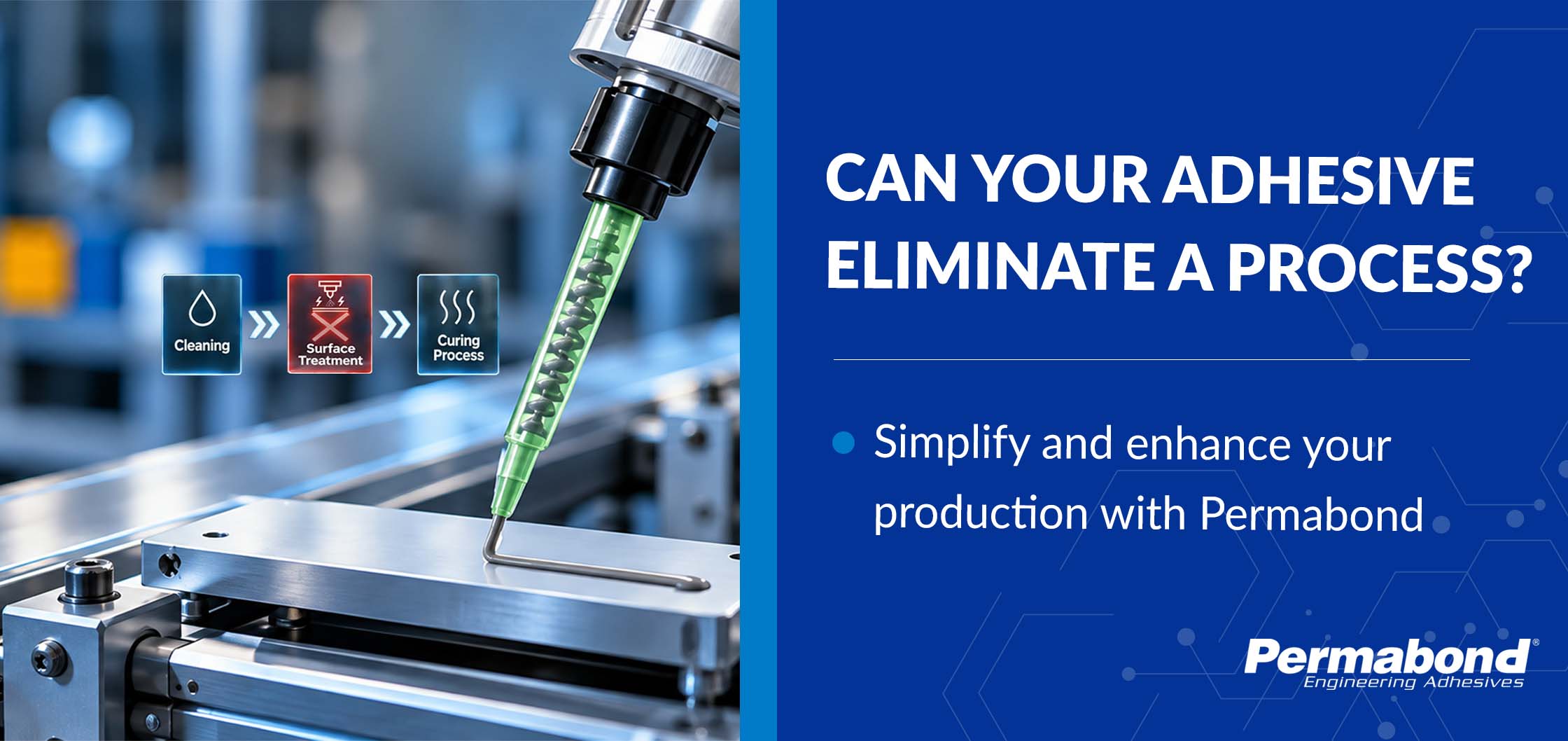
Adhesive surface preparation doesn’t have to mean acid baths, plasma units, or solvent primers. See how toughened acrylics can remove steps from your line.
Discover how modern engineering adhesives from Permabond are helping manufacturers to replace hazardous joining and surface treatment practices.


