La fibra de carbono se ha convertido en uno de los materiales más importantes de la ingeniería moderna. Desde la industria aeroespacial y automovilística hasta las aplicaciones en equipos deportivos y energías renovables, este avanzado compuesto ofrece una notable combinación de rendimiento ligero, alta resistencia y flexibilidad de diseño que está remodelando la forma en que los ingenieros resuelven los retos estructurales.
En este artículo explicamos qué es la fibra de carbono, cómo se fabrica y por qué se ha hecho tan popular. Hablaremos de cómo la industria recurre cada vez más a la unión adhesiva (en lugar de la fijación mecánica tradicional) para unir piezas de fibra de carbono. También compartiremos consejos prácticos sobre la unión de fibra de carbono con adhesivos y exploraremos las aplicaciones industriales en las que la unión adhesiva es la opción superior.
¿Qué es la fibra de carbono?
La fibra de carbono está formada por filamentos extremadamente finos (normalmente de 5 a 10 micrómetros de diámetro) de átomos de carbono principalmente unidos en una estructura cristalina grafítica. Estos cristales microscópicos se alinean a lo largo de la fibra. Esto crea una resistencia a la tracción y una rigidez muy elevadas, al tiempo que mantiene baja la densidad.
Proceso de fabricación
La producción de fibra de carbono comienza con un precursor polimérico, normalmente poliacrilonitrilo (PAN). El proceso de fabricación implica varias etapas clave:
-
Girando
El precursor de PAN se hila en fibras largas.
-
Estabilización
Estas fibras se calientan al aire para oxidarlas y crear una estructura estable en forma de escalera.
-
Carbonización
A temperaturas de 1.000-1.500 °C en atmósfera inerte, se expulsan los elementos no carbonados, como el hidrógeno y el nitrógeno, dejando una fibra con alto contenido en carbono.
-
Grafitización (opcional)
Un tratamiento térmico posterior (hasta ~3.000 °C) mejora la alineación de los cristales de carbono para conseguir una rigidez aún mayor.
-
Tratamiento de superficies y dimensionamiento
Las fibras se tratan y recubren para mejorar la adherencia a las matrices de resina durante la fabricación del composite.
Una vez procesadas, estas fibras se tejen normalmente en tejidos y se combinan con una matriz de polímero (a menudo epoxi) para formar compuestos de polímero reforzado con fibra de carbono (CFRP), que son la forma industrial más común de material de fibra de carbono.
Puedes ver más información sobre cómo se fabrica la fibra de carbono en el siguiente vídeo (en inglés).
¿Por qué es tan popular la fibra de carbono?
No sólo tiene un aspecto agradable: varias propiedades distinguen a la fibra de carbono de los materiales tradicionales.
- Alta relación resistencia-peso: la fibra de carbono es más resistente que muchos metales con una fracción de su peso.
- Alta rigidez: tiene una excelente rigidez para aplicaciones estructurales.
- Baja expansión térmica: mantiene la estabilidad dimensional con el cambio de temperatura.
- Resistencia a la corrosión, lo que la hace ideal para entornos difíciles.
- Resistencia a la fatiga: la fibra de carbono ofrece un rendimiento superior bajo cargas cíclicas.
Estas características han llevado a una rápida adopción en múltiples industrias, sobre todo allí donde la reducción de peso y el rendimiento son especialmente importantes (piensa en coches deportivos, aviones).
En el sector aeroespacial, la fibra de carbono puede sustituir al aluminio en los paneles del fuselaje y la piel de las alas; en automoción, permite estructuras de carrocería más ligeras que mejoran la eficiencia y la maniobrabilidad; en energía eólica, proporciona palas rígidas pero ligeras que pueden proporcionar una mayor captura de energía.
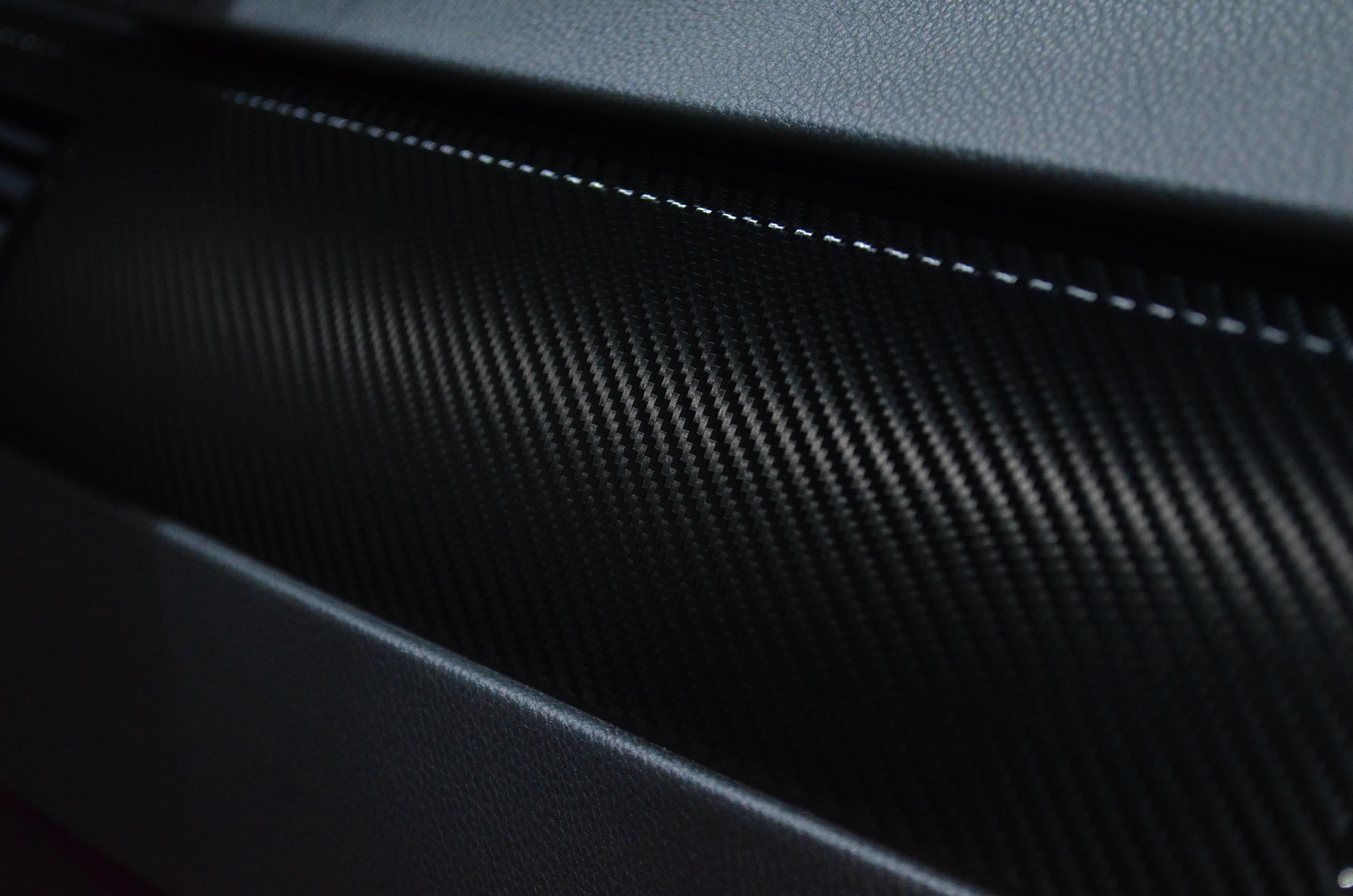
Revestimiento interior de fibra de carbono para coches
¿A qué materiales está sustituyendo la fibra de carbono?
Los compuestos de fibra de carbono se eligen con frecuencia frente a materiales tradicionales como:
Acero
Aunque el acero es fuerte, es pesado y propenso a la corrosión. La fibra de carbono ofrece un rendimiento mecánico comparable, pero es considerablemente más ligera. Esto ayuda a aumentar la eficiencia en vehículos y aviones.
Aluminio
Aunque es más ligero que el acero, el aluminio sigue estando por debajo de la relación rigidez-peso de la fibra de carbono. El CFRP también presenta mejor resistencia a la fatiga que el aluminio, por lo que es ideal para cargas dinámicas.
Titanio
El titanio combina fuerza y resistencia a la corrosión, pero es caro. En muchas aplicaciones estructurales en las que el coste y el peso son críticos, la fibra de carbono ofrece un rendimiento comparable a un coste total inferior.
Compuestos de fibra de vidrio
Los compuestos de fibra de carbono superan a los de PRFV en rigidez y resistencia, por lo que son preferibles para aplicaciones de alto rendimiento en las que el coste es secundario respecto al rendimiento del material.
Unir fibra de carbono con adhesivos
Una de las formas más eficaces de unir componentes de fibra de carbono es mediante la unión adhesiva, pero no es tan sencillo como pegar dos superficies. El éxito requiere conocer tanto el material como las tecnologías adhesivas que mejor funcionan con él.
¿Por qué elegir adhesivos?
La unión adhesiva ofrece varias ventajas sobre la fijación mecánica tradicional (pernos, remaches, soldaduras):
-
No es necesario taladrar
Los taladros cortan las fibras de carbono y debilitan los materiales compuestos; los adhesivos lo evitan por completo.
-
Distribución uniforme de la carga
Los adhesivos reparten las cargas sobre la zona unida, reduciendo las concentraciones de tensiones.
-
Reducción de peso
En comparación con las fijaciones metálicas, los adhesivos añaden un peso extra mínimo, lo que es fundamental en aplicaciones aeroespaciales y de automoción.
-
Mejora del rendimiento frente a la fatiga
Las uniones adhesivas soportan mejor los esfuerzos cíclicos que las uniones fijadas por puntos.
-
Gestión de la corrosión
Los adhesivos pueden aislar la fibra de carbono de las piezas metálicas que, de otro modo, podrían corroerse debido a reacciones galvánicas.
-
Crea un sellado del 100% (a diferencia de los agujeros taladrados con un sujetador atravesado)
Estas ventajas hacen que los adhesivos sean una opción cada vez más común para unir tanto fibra de carbono con fibra de carbono como con otros materiales, como aluminio, acero o titanio.
Desafíos de la unión de fibra de carbono
A pesar de las ventajas enumeradas anteriormente, hay algunos factores clave que deberás tener en cuenta antes de unir fibra de carbono con adhesivos. Estos son
-
Contaminación superficial
Los agentes desmoldeantes utilizados en la fabricación pueden inhibir la adhesión. La mayoría de los adhesivos requieren una superficie limpia para adherirse eficazmente.
-
Baja energía superficial
Algunas matrices poliméricas tienen una energía superficial baja, lo que dificulta la adhesión sin una preparación adecuada de la superficie. Esto puede hacer que, en algunos casos, la fibra de carbono sea similar a una poliolefina como el PE o el PP y, por tanto, más difícil de adherir.
-
Anisotropía
Los compuestos de fibra de carbono tienen propiedades que dependen de la dirección. En otras palabras, son más fuertes en unas direcciones que en otras, y el diseño de las juntas adhesivas debe tenerlo en cuenta.
-
Desajuste de la dilatación térmica
Al unir CFRP a metales, las diferencias de dilatación térmica pueden inducir tensiones en la línea de unión. En realidad, la fibra de carbono tiene un coeficiente de dilatación térmica (CTE) muy bajo, a menudo igual o inferior a cero, lo que la hace muy estable a temperaturas altas y bajas. En cambio, otros sustratos, como los plásticos, tienen un CET mucho mayor. Si el adhesivo que elijas no puede soportar las diferentes velocidades de hinchamiento y encogimiento de los sustratos con la temperatura, no resistirá mucho tiempo.
Aunque estos factores añaden complejidad, pueden gestionarse eficazmente con una correcta preparación y selección del adhesivo.
Elegir el adhesivo adecuado para la fibra de carbono
Se pueden utilizar con éxito diversos tipos de adhesivos para unir fibra de carbono, cada uno adecuado a necesidades diferentes:
Adhesivos epoxi
Los epoxis se encuentran entre los adhesivos más utilizados para la fibra de carbono, debido a su gran resistencia estructural y a su compatibilidad con las matrices compuestas. Son comunes los epoxis de uno y dos componentes.
- Los epoxis monocomponentes proporcionan solidez, resistencia al calor y un buen relleno de huecos verticales. Sin embargo, necesitan calor para curarse.
- Los epoxis de dos componentes, como Permabond ET5428/ET5429, ofrecen una gran resistencia y tenacidad, y pueden unir la fibra de carbono a otros sustratos como el aluminio y el acero. A diferencia de los epoxis 1K, curan completamente a temperatura ambiente.
Acrílicos estructurales
Los acrílicos estructurales (por ejemplo, los sistemas basados en metacrilato de metilo) ofrecen una alta resistencia al pelado y al impacto, lo que los hace adecuados para aplicaciones con cargas dinámicas o en las que se necesita cierta flexibilidad en la unión.
Permabond TA4208 es un acrílico estructural a base de MMA que se adhiere muy bien a la fibra de carbono, proporcionando uniones fuertes y duraderas que no se desploman ni pandean tras la aplicación. Puede adherirse a través de superficies aceitosas y capas de óxido, y es de color negro azabache, a juego con la fibra de carbono.
Cianoacrilatos
Conocidos comúnmente como “superglue”, los cianoacrilatos suelen proporcionar una menor resistencia a largo plazo en los materiales compuestos. Son más adecuados para fijaciones o posicionamientos temporales que para uniones estructurales primarias.
Dado que la fibra de carbono se utiliza a menudo en aplicaciones estructurales que pueden estar expuestas a altos niveles de vibración, pelado y fuerzas de impacto, normalmente se prefieren los adhesivos endurecidos con caucho, ya que ofrecen una mayor resistencia en estas condiciones.
Preparación de la superficie: la base de una unión fuerte
Además de elegir el adhesivo adecuado, como Permabond ET5428, ET5429 o TA4208, conseguirás resultados uniformes pegando la fibra de carbono siguiendo previamente estos pasos:
- Desengrasa: Limpia la fibra de carbono con acetona o isopropanol para eliminar cualquier resto de aceite.
- Abrillantar: Utiliza papel de lija o estropajos abrasivos para eliminar el brillo y dar rugosidad a la superficie.
- Limpia de nuevo: Limpia el polvo del lijado/abrasado.
- Seca: Asegúrate de que la superficie esté completamente seca. Entonces, ¡ya puedes pegar!
Hacer esto garantiza que el adhesivo pueda entrar en contacto más profundo con la fibra de carbono, maximizando la fuerza de adhesión y la durabilidad.
Consejos prácticos para unir con éxito la fibra de carbono:
Los consejos siguientes pueden ayudarte a maximizar tus posibilidades de conseguir una unión fuerte y duradera en la fibra de carbono.
-
Maximizar el área de enlace
Las zonas de unión más anchas distribuyen las cargas de forma más uniforme y mejoran el rendimiento. Permiten diferencias en el CET y, en consecuencia, proporcionan una mejor resistencia a la temperatura.
-
Enmascara las zonas que no desees que se raspen/rayen
Esto garantiza que estas zonas no resulten dañadas durante los procesos de preparación de la superficie
-
Evita las tensiones de pelado
Diseña las juntas de modo que el cizallamiento, y no el pelado, sea el modo de tensión dominante.
-
Controlar el grosor del adhesivo
Utiliza espaciadores o técnicas de dispensación controlada para mantener uniforme el grosor de la línea de unión.
-
Tener en cuenta los efectos térmicos
En diseños en los que la temperatura fluctúa, selecciona adhesivos y geometrías de junta que puedan adaptarse a la dilatación diferencial. Permabond ET5428 y ET5429 están endurecidos con caucho y ofrecen la flexibilidad necesaria para las diferencias de CET entre sustratos.
-
Curación en condiciones controladas
La temperatura, la humedad y la sujeción pueden afectar al curado y a las propiedades finales de la junta.
-
Opta por adhesivos de color gris muy oscuro / carbón / negro
Esto garantiza un aspecto final liso y de color uniforme
-
Tener un “filete” o menisco de adhesivo limpio a lo largo del borde pegado
Esto ayudará a que la junta resista mejor las fuerzas de pelado o hendidura, además de proporcionar un sellado impermeable a los líquidos.
¿Dónde se utiliza la fibra de carbono en la industria?
En toda la industria, hay muchas aplicaciones en las que se prefiere la unión adhesiva de la fibra de carbono a las fijaciones mecánicas u otros métodos de unión.
Aeroespacial
Desde los paneles del fuselaje hasta las estructuras de las alas, los fabricantes aeroespaciales confían en la unión adhesiva para mantener la resistencia al tiempo que minimizan el peso. Los adhesivos también sirven para unir CFRP con metales como el titanio en estructuras híbridas.
Automóvil
En los vehículos de altas prestaciones y los VE, los componentes de la carrocería y los refuerzos estructurales de fibra de carbono aglomerada ayudan a reducir el peso y mejoran la autonomía y la agilidad.
Energía eólica
Los grandes conjuntos de palas de material compuesto se unen a los largueros y los herrajes mediante adhesivos estructurales avanzados, ofreciendo resistencia a la fatiga durante millones de ciclos de carga.
Marina
En barcos y estructuras marinas, los adhesivos permiten integrar el refuerzo de fibra de carbono en cascos y cubiertas sin introducir aumentos de tensión por perforación.
Medicina y prótesis
Las prótesis de alto rendimiento se fabrican con una combinación de compuestos ligeros -especialmente fibra de carbono- combinados con otros materiales para producir miembros artificiales impresionantes.
Industria y construcción
Las planchas o placas de fibra de carbono adheridas al acero y al hormigón se utilizan para reforzar puentes, edificios y otras infraestructuras, proporcionando una solución de rehabilitación de alto rendimiento.
Artículos deportivos
Bicicletas, raquetas, esquís y cascos son ejemplos en los que la unión adhesiva permite ensamblajes multimaterial complejos con una resistencia y estética excelentes.
Reflexiones finales
La fibra de carbono se ha convertido en un material de ingeniería transformador, apreciado por su ligereza, alta resistencia y durabilidad. Su adopción en todas las industrias refleja un cambio hacia estructuras más eficientes y de alto rendimiento.
La unión adhesiva, cuando se realiza con los materiales, la preparación y el diseño adecuados, libera todo el potencial de los conjuntos de materiales compuestos. Al evitar los inconvenientes de la fijación mecánica y proporcionar uniones más ligeras, fuertes y resistentes a la fatiga, los adhesivos se están convirtiendo en el método de unión preferido en muchas aplicaciones punteras de fibra de carbono.
Si quieres saber más sobre las soluciones Permabond para unir fibra de carbono o hablar de tu proyecto con nosotros, ponte en contacto con nosotros.

Permabond le ayudará a elegir el adhesivo correcto para su aplicación.

Los productos Permabond se comercializan a través de distribuidores en todo el mundo.

Permabond es una compañía que cuenta con la certificación ISO QMS Certified.