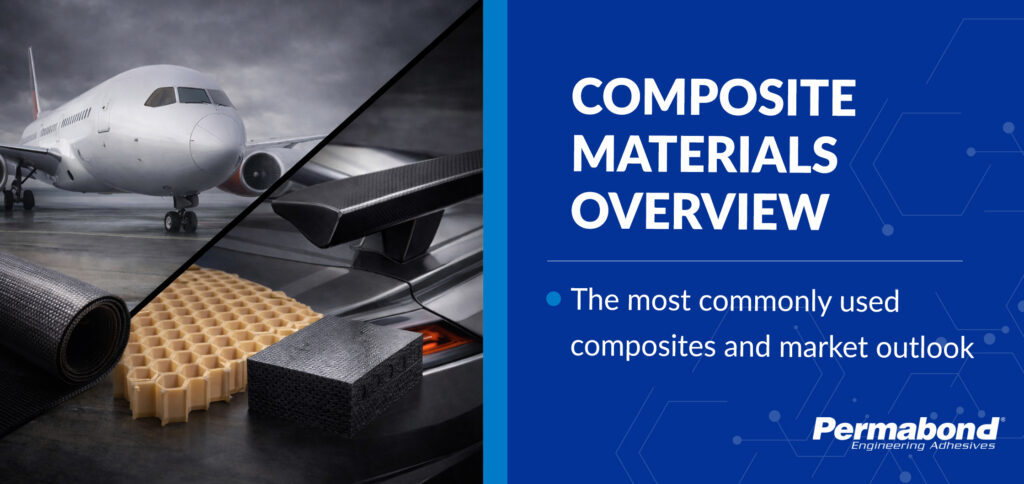
In recent times, composite materials have become a cornerstone of modern manufacturing. By combining strength, durability, and lightweight performance, composites such as carbon fibre, fibreglass (FRP/GRP), laminates, and emerging hybrid materials are transforming industries from aerospace and automotive to wind energy and construction. This is a steadily growing market with a bright future.
What Are Composite Materials? A Brief Overview
At a basic level, composite materials are engineered by combining two or more constituent materials together. Once combined, these materials remain distinct at a microscopic level, but together form a material with better overall performance than either alone.
The two types of material often combined in composites are reinforcing fibres with a matrix material. The fibres provide strength and stiffness, while the matrix (often a polymer, metal or ceramic) binds the fibres and helps transfer stresses across them.
At their core, composites deliver superior mechanical properties relative to traditional metals and polymers. Such properties include higher strength-to-weight ratios, corrosion resistance, and design flexibility. As industrial demand grows for performance, sustainability, and efficiency, composite materials are playing an increasingly pivotal role in global markets.
Key Composite Types
Carbon Fibre Composites
Carbon fibre composites consist of extremely strong carbon filaments embedded in a resin matrix, typically epoxy. They exhibit an exceptionally high strength-to-weight ratio, excellent fatigue resistance, and good thermal stability, making them ideal for demanding applications.
The carbon fibre composites market alone was valued at around USD 20.5 billion in 2024, with forecasts projecting robust growth to USD 53.6 billion by 2034 (CAGR ~10%).
Common carbon fibre applications include aerospace structures (wing skins, fuselages), high-performance EV platforms, premium automotive parts, high-end sports equipment, and expanding roles in renewable energy.
Strengths: Unmatched specific stiffness and strength, lightweight, corrosion resistance.
Potential drawbacks: Higher cost relative to traditional materials; manufacturing complexity and recycling concerns.
Fibreglass (FRP/GRP) Composites
Fibreglass composites, often called FRP (Fibre Reinforced Polymer) or GRP (Glass Reinforced Plastic) combine glass fibres with polymer matrices (e.g., epoxy, polyester) to yield a versatile and cost-effective composite.
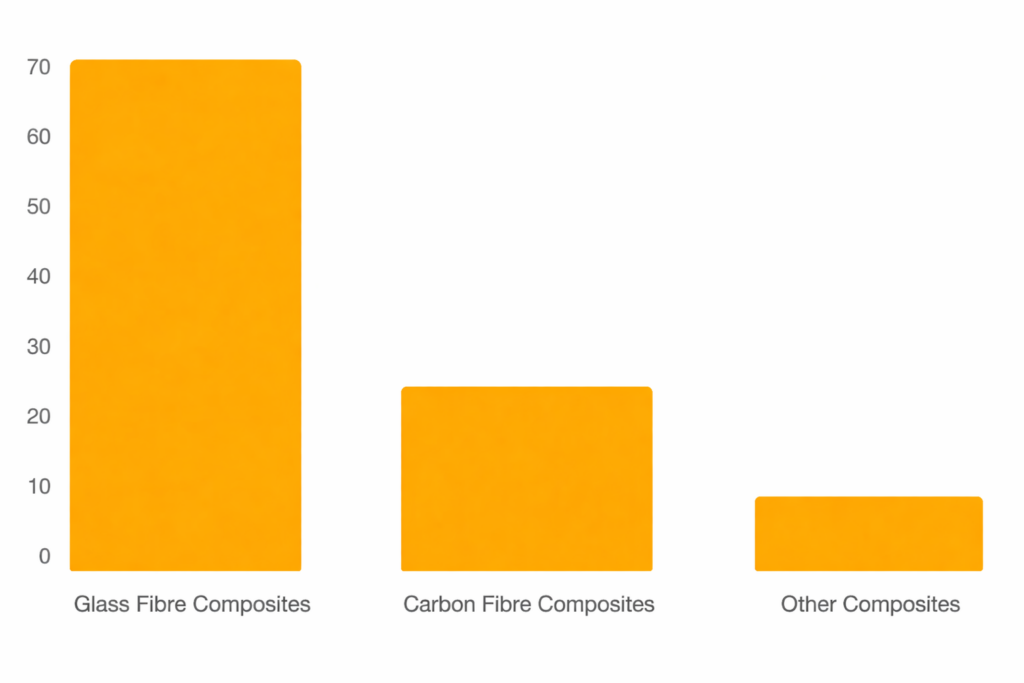
Despite the ‘wow’ factor of carbon fibres, glass-based fibre composite materials still account for the majority of composites produced today – around 65% of the total market.
Applications include construction reinforcement, chemical tanks and vessels, automotive parts, marine hulls and structures, and infrastructure upgrades.
Strengths: Good mechanical properties at a comparatively low cost, excellent corrosion resistance, ease of manufacturing, lightweight – easy to transport
Important Note: FRP/GRP materials are widely used in chemical tank fabrication and other industrial installations due to their durability and corrosion resistance.
Laminates and Other Polymer Matrix Composites
Laminates are a broad category of layered composites, often used where anisotropic strength (stronger in certain directions) and stiffness characteristics are beneficial. This category spans everything from high-performance aerospace skins to consumer goods housings.
Market Size & Growth: A Rapidly Expanding Sector
The global composite materials market has seen robust growth and is forecast to expand significantly over the coming decade.
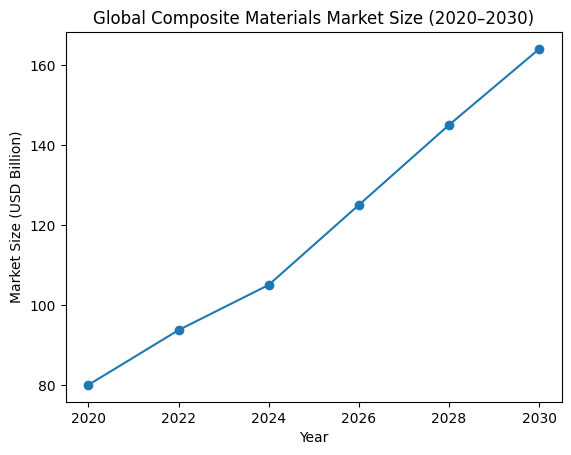
In 2022 the global composites market was valued at approximately USD 93.7 billion, with projections to reach around USD 164 billion by 2030, growing at a compound annual growth rate (CAGR) of about 7.2% between 2023 and 2030.
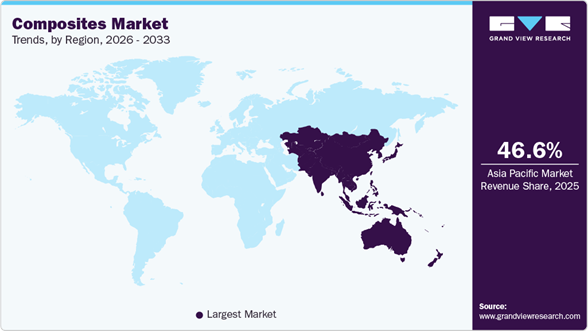
More recent analyses show the overall composites sector valued at USD 90 billion in 2024 and forecast to grow to roughly USD 131.3 billion by 2030 at a CAGR of 6.5%. Whichever figures you use, it’s clear that this is a market sector experiencing significant growth year on year. The Asia-Pacific area has emerged as a particularly dynamic region, accounting for significant market share and is expected to maintain strong growth momentum, especially in China and India.
Key Drivers of Composite Market Growth
There are several overlapping trends fuelling demand for composite materials across industry.
-
Lightweighting for efficiency and sustainability
Reducing weight in vehicles and aircraft improves fuel efficiency and reduces emissions. For instance, a 10% reduction in vehicle weight can boost fuel economy by roughly 6-8%. This is a considerable factor driving the adoption of composite materials in the automotive and aerospace sectors.
-
Renewable Energy Expansion
Wind turbine blades, largely constructed from glass-fibre reinforced polymers, represent a massive and growing end market for composites. As wind installations expand globally, demand for long, high-performance composite blades goes up.
-
Infrastructure and Construction Use
Composites offer corrosion resistance and longevity, making them attractive for bridge retrofits, reinforcement bars, and specialty construction components. Growing infrastructure investment worldwide is supporting a greater use of composite materials.
-
Advanced Manufacturing Technologies
Automation, additive manufacturing (3D printing), and advanced lay-up processes are reducing production costs and opening new design possibilities, especially for complex composite geometries.
-
Sustainability and Circular Economy Trends
Environmental regulations and customer preferences are pushing towards recyclable and bio-based composites, though this remains an evolving area. Emerging research and lifecycle optimisation suggest future opportunities.
Major End-Use Markets
Composite materials find use across a wide range of industries:
Aerospace & Defense
Demand for fuel efficiency and performance drives the use of carbon fibre composites in wings, fuselages, nacelles, and interior structures.
Automotive
Lightweight composites are increasingly applied in EVs, structural components, bumpers, and body panels to improve efficiency and extend battery range.
Wind Energy
Large composite blades, often >60 m in length, are critical for utility-scale wind turbines. Composite strength and fatigue resistance are essential here.
Construction & Infrastructure
Corrosion-resistant FRP reinforcements, panels, and bespoke structural elements offer longevity and reduced maintenance.
Marine & Industrial
Boats, tanks, piping, and industrial equipment benefit from composites’ durability and resistance to environmental degradation.
Sports & Consumer Goods
High performance sports equipment (bikes, rackets, helmets) leverages composites for reduced weight and increased stiffness.
Challenges & Market Constraints
Despite their advantages, composites face some obstacles, such as:
High Raw Material & Processing Costs: Carbon fibre and other high-performance resins tend to be more expensive than more traditional materials.
Recycling & End-of-Life Issues: Composite recycling remains difficult and costly, especially for thermoset systems.
Supply Chain Complexity: Complex manufacturing and global supply chain risks can constrain production consistency.
These challenges incentivise innovation in recycling, thermoplastic composites, and greener manufacturing methods.
Outlook: What’s Next?
The composite materials market is set for continued expansion into the future. Financial forecasts consistently show healthy double-digit CAGRs across most composite segments to 2030 and beyond. With ever-increasing demand for lightweighting and improved performance, the use of composites is only going to increase as time goes on.
Technical innovation in this area means that advances in thermoplastic composites, structural battery composites, and automated manufacturing may unlock new potential applications in the near future. And with an increasing emphasis being placed on recycling and reducing carbon footprints, the hope is that these innovations will bring with them breakthroughs in greener composite technology.
How Permabond can help
Permabond offers a wide assortment of adhesives that readily bond composite materials such as carbon fibre, FRP and GRP. Products such as Permabond TA4208 Black and Permabond ET5428 excel at this purpose. In the next few weeks we’ll be highlighting our core composites range in depth, showcasing how they can help you with your composite bonding application.
If you’d like to get in touch with us to discuss your application, please do so here.

Permabond will help you select the right adhesive for your application.

Permabond products are sold through distributors worldwide.

Permabond is an ISO QMS Certified company.