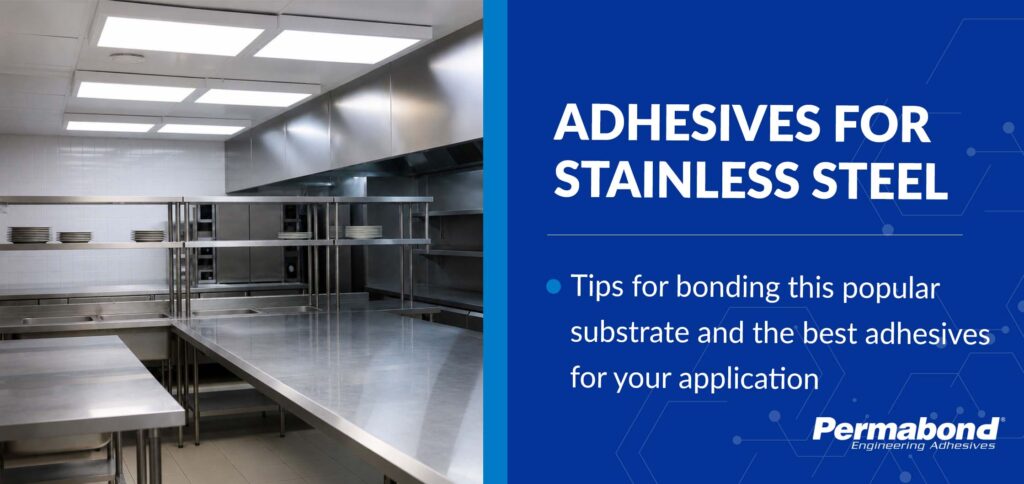
Stainless steel: The steel you see
Steel is by far the most popular metal used in manufacturing and engineering. Due to its ubiquity in everyday items, you might think that stainless steel is the most common type of steel made, but this is actually untrue – carbon steel takes that title. Stainless steel actually only accounts for about 3 – 5% of global steel production, but is far more visible!
Stainless steel, like all steels, is an alloy. While carbon steel is just iron and carbon, stainless steel adds a few other metals to the mix. Most important is chromium, which must be at least 10.5% of the mixture. Chromium is what gives stainless steel its brilliant appearance and its non-rusting properties. Molybdenum, nickel and nitrogen are also often added to improve strength and environmental resistance.
Where is stainless steel used?
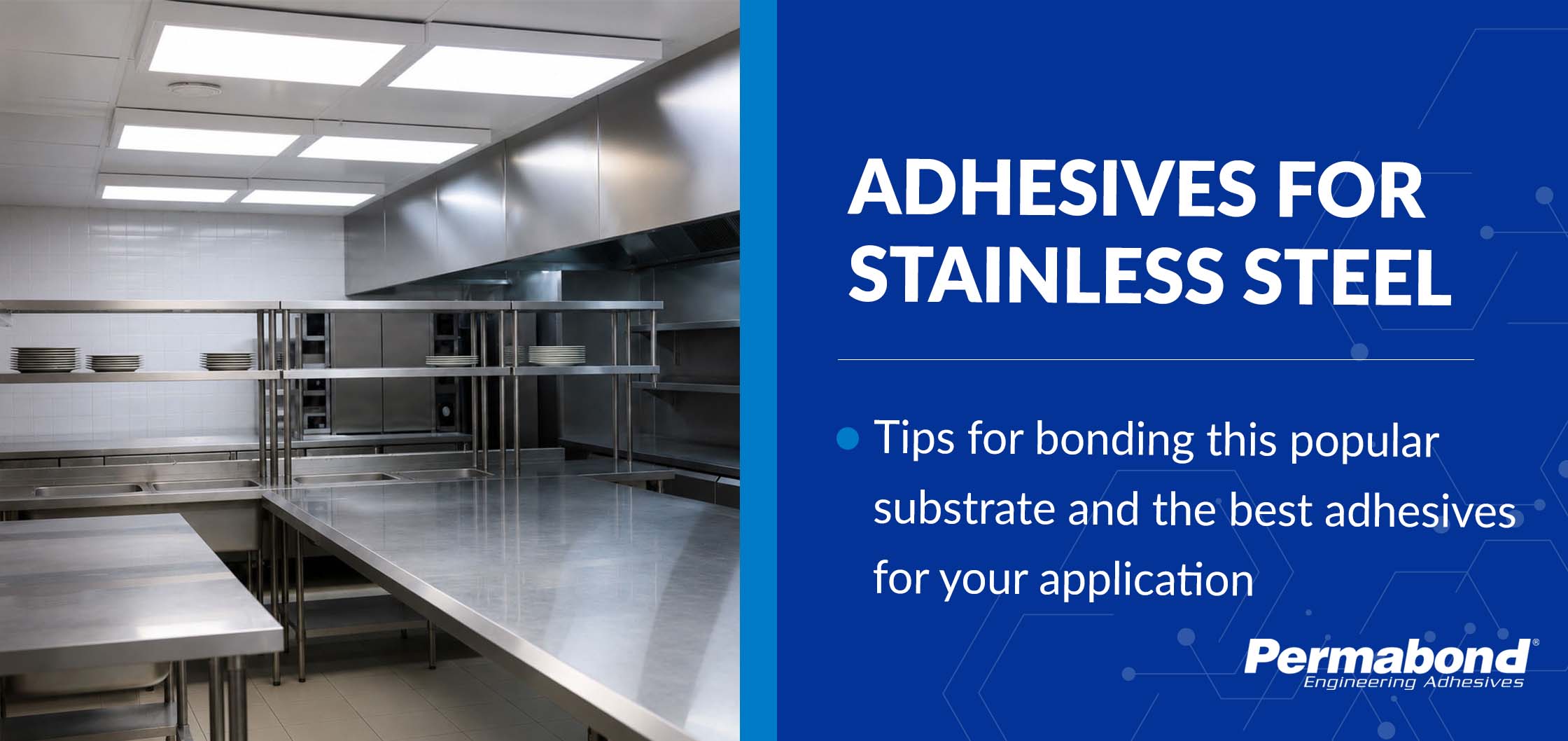
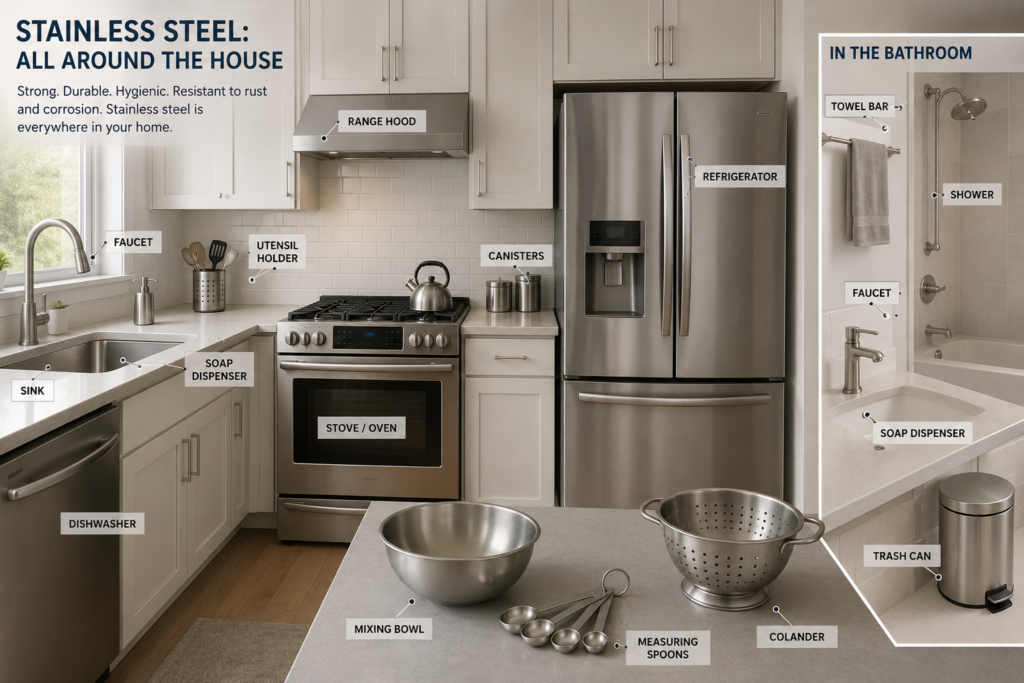
You likely come across or use something made of stainless steel every day. Cooking utensils and cutlery like spoons and forks are very commonly made of stainless steel, as are pots, pans and other kitchen equipment. Your kitchen sink may also be made of this metal. Moving out of the kitchen, stainless steel is also frequently used in bathroom shower heads, taps and towel rails. The medical industry uses it for trays and surgical tools, the automotive & transport industry in car exhaust pipes and train/bus frames, and construction in cladding, roofing and internal fixtures.
Stainless steel is so popular because, put simply, it looks nice and doesn’t rust. It provides a clean, modern finish that lasts over time. Another reason for stainless steel’s popularity is its ease of cleaning, which makes it highly suitable for food-contact applications.
Bonding stainless steel: Issues to consider
There are many good adhesives for stainless steel, which we’ll cover in more detail later. However, in order to get a strong bond on stainless steel, you need to take a few important things into account beforehand.
The main issue when bonding stainless steel is its passive chromium oxide layer. This layer forms naturally on its surface when the chromium present in the metal comes into contact with oxygen. If you’ve read our other recent articles on bonding metals like copper and aluminium, you might be wondering if you can simply follow the same advice given there for surface preparation – namely, degrease and abrade.
The answer to this is yes, but with some caveats. Do degrease with a solvent wipe, acetone or isopropanol as you would with other metals. And while you can abrade stainless steel, it presents the following challenges:
- Stainless steel is manufactured to have a hard surface that is difficult to abrade. The chromium and nickel in the metal actively resist surface damage.
- Certain polished grades of stainless steel, including so-called ‘mirror finish’ stainless steel, are even harder to abrade since their surfaces will not readily scratch.
- Abrading standard stainless steel ruins its appearance. It leaves scratches and reduces the shine/reflectiveness characteristic of this metal.
Preparing stainless steel for bonding
In addition to degreasing, abrade your stainless steel if it’s practical to do so. Grit blasting is a good alternative to abrasion for stainless steel types that are harder to abrade – with either method, make sure you mask off any areas of the metal that you don’t want to be scratched or shotblasted. You may also wish to consider plasma treating your stainless steel, as this is actually one of the best ways to increase adhesion to this substrate. Plasma treatment offers the following benefits:
- Removes microscopic oils and other contaminants from the metal’s surface
- Raises the surface energy of the metal, making it easier for an adhesive to ‘wet’ the surface and create a strong bond. This is especially beneficial when bonding mirror-finish stainless steel, as it tends to have a low surface energy
- Increases adhesive grip by etching microscopic pits into the metal’s surface
Advantages of using adhesives for stainless steel
You may be wondering why you should choose an adhesive for bonding stainless steel over another method of joining, such as welding or mechanical fasteners. Putting the issue of surface preparation to one side, there are a multitude of benefits to using adhesives for stainless steel compared to both welding and fasteners:
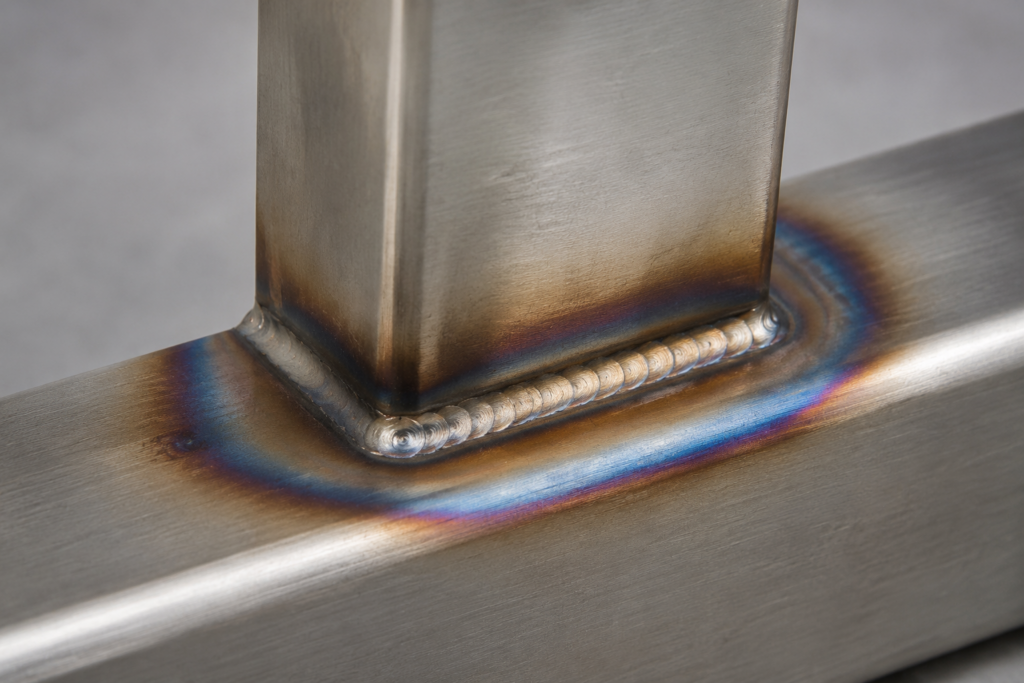
- Preserve the appearance of the metal. Adhesives, unlike both welding and fasteners, fully preserve the nice appearance of stainless steel. This is particularly important if your application is decorative. Welding causes tarnishing on the surface of stainless steel, while fasteners are often visible and unsightly. Some adhesives even have a metallic appearance to enable maximum aesthetic compatibility with metals like steel – you can actually make an adhesive look like a soldered or welded joint, just without the tarnishing!
- Prevent corrosion. Adhesives, when applied correctly, form a 100% seal in the joint that blocks out moisture and gases. Fasteners often allow moisture in, which can lead to galvanic corrosion.
- Reduce weight. Adhesives spare the added weight of fasteners or weld beads to the final product, optimizing lightweighting.
- No heat distortion. Adhesives avoid high-temperature warping, thermal discoloration, or structural changes in the stainless steel matrix.
- Even stress distribution. Unlike welding and fasteners, adhesives distribute stress evenly across the entire joint. Welding and fasteners concentrate stress in specific areas and don’t create a 100% seal, unlike adhesives.
- Ideal for bonding dissimilar materials. Adhesives are ideal for bonding stainless steel to other metals, plastics, composites, glass and other materials. Welding cannot do this.
The best adhesives for stainless steel
The best adhesives for stainless steel provide high bond strength, good durability and resistance to impact, vibration and corrosion. Below we’ll highlight the top adhesive chemistries for bonding stainless steel.
Epoxies (the best choice overall)
Epoxy adhesives are ideal for bonding stainless steel. Most epoxies offer the ‘holy trinity’ of high strength, good environmental resistance and good gap filling abilities. Many are also toughened, giving them the flexibility to bond stainless steel to other substrates with a different coefficient of thermal expansion (CTE).
Good options to consider include Permabond ET5392 and ET5393, two-part epoxies that were specially designed for bonding stainless steel. They offer high shear strength, peel and impact resistance, provide a 100% seal against liquids and gases and are ideal for bonding stainless steel to itself and to other substrates.
Another great option for bonding stainless steel is Permabond ET5428 and its sister product Permabond ET5429. These two-part epoxies are good all-rounders and ideal for bonding dissimilar substrates and offer very high shear strength on stainless steel. Permabond ET538 is another good option to consider and has excellent gap filling abilities and chemical resistance.
Single-part, heat-curing epoxies are also available. Several of these have a metallic appearance, ideally color matching to stainless steel. Not only do these look the part, but they also provide the ultimate in bond strength and environmental resistance on steel. Single-part epoxies Permabond ES550 and ES558 both offer exceptionally high shear strength on steel, up to 41 N/mm² (6000 psi). Cure speed can be optimized, with higher temperatures providing a faster cure.
Food or drink application? You need an epoxy!
As mentioned earlier, stainless steel is frequently used in the food and drinks industry because it’s strong, reliable and very easy to clean. However, when it comes to parts coming into contact with food and drink in the US or Europe, you can’t just use any adhesive – it needs to conform to strict regulations set by the FDA and the EU.
If you have a food or drink application that requires high bond strength, you’ll need to use an epoxy. Other adhesive chemistries such as cyanoacrylates and adhesives that cure using UV light, among others, are not included under FDA 175.300 and EU 10/2011 food contact regulations.
Since stainless steel is so often used in food-contact applications, we developed Permabond ET5164, a two-part epoxy compliant with FDA 175.300 and EU 10/2011 for this very purpose. Available in Europe, Africa & Asia, ET5164 is ideal for bonding stainless steel as well as a variety of other materials such as plastics and composites. It has optimal rheology and controlled flow properties, as well as a long open time for accurate parts alignment.
For customers in the Americas, consider Permabond ET5145 and ET5147 for your food-based application. These both meet the requirements of FDA 175.105 and are ideal for bonding a wide variety of substrates.
Structural acrylic adhesives for stainless steel
If curing speed is a priority for you, you may wish to consider using a structural acrylic adhesive. Structural acrylics, especially MMA-based acrylics, offer a quick cure and fast strength development. They also tend to offer good impact resistance and peel strength.
Consider Permabond TA4246 for bonding stainless steel, alongside Initiator 46M. It offers very high shear and peel strength on steel, along with excellent impact and chemical resistance.
Anaerobic adhesives for stainless steel
Anaerobic adhesives cure in the presence of metal and the absence of oxygen. This makes them generally well suited to bonding metals in a small, tight gap. For stainless steel, these work well when tackling close-fitting cylindrical assemblies, otherwise known as coaxial joints.
Since stainless steel is not a particularly active metal, choose a more active anaerobic adhesive when bonding this metal such as Permabond HM162 or HM163.
For stainless steel threaded pipe joints, Permabond MH052 is particularly suited to sealing these. It has a reactive cure mechanism and propagation which cures reliably on stainless steel, even when applying at temperatures down to 10°C.
Cyanoacrylates
Cyanoacrylates (also known as superglues) are among the fastest-curing adhesives available. This makes them highly suitable for small bonding jobs where a quick working strength is needed. They tend to work well on stainless steel, but we don’t recommend them for larger bond areas or joints requiring high structural strength.
UV adhesives for stainless steel
UV adhesives cure rapidly when exposed to UV light. They need at least one transparent surface in order to cure, and they are thus highly suitable for bonding stainless steel to materials such as glass and clear plastics.
UV adhesives are commonly used in the medical industry for bonding stainless steel to plastics in medical devices – for example, bonding needles into plastic hubs. For such jobs, consider Permabond 130UV and 135UV. These dual-curing UV/cyanoacrylate adhesives ensure a full, rapid cure even in areas where UV light doesn’t reach.
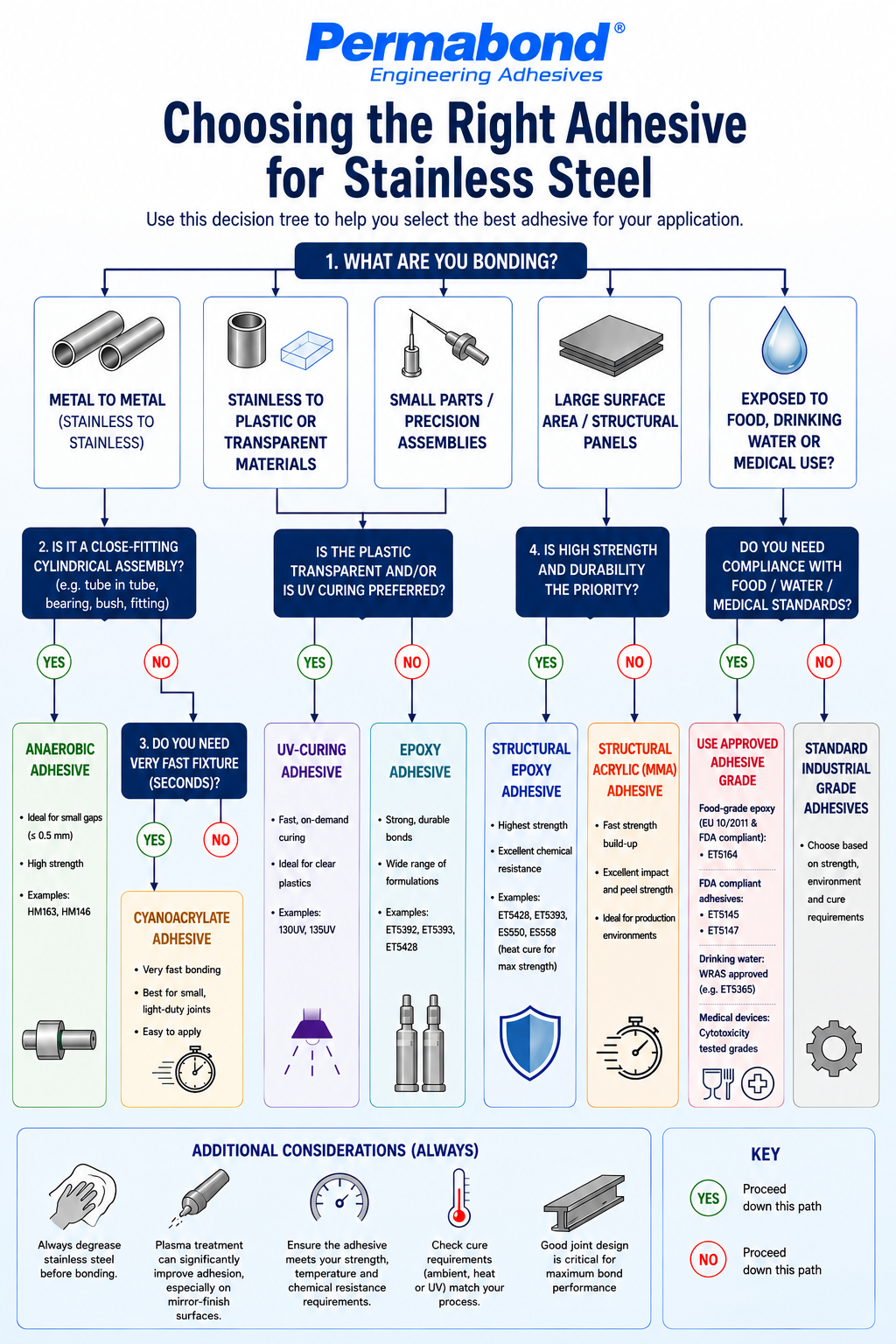
The decision tree below can help you to choose the best adhesive for your stainless steel application.
Frequently asked questions (FAQs) on bonding stainless steel
What is the best adhesive for stainless steel?
The best adhesive for stainless steel depends on your application, but for maximum strength, durability and gap filling abilities, an epoxy would work best. Permabond ET5392 & ET5393 were specially designed for bonding stainless steel, while Permabond ET5428 is a great all-rounder. Consider Permabond ET5164 for applications involving food or drink contact.
How do you prepare stainless steel for adhesive bonding?
To prepare stainless steel for bonding, degrease with acetone, isopropanol or Permabond Cleaner A as you would with other metals. You can then either abrade using grit paper or use a grit blaster. Alternatively, a reliable method of preparing stainless steel for bonding while preserving its aesthetic finish is to use plasma treatment.
Do you need to sand stainless steel before bonding?
You don’t need to sand stainless steel before you bond it, but it can be helpful. Sanding or abrading stainless steel can be much more challenging than with other metals, however, since stainless steel is very hard and designed in such a way that its surface can’t easily be roughened up. Grit blasting may be more reliable here, or, if you can, use plasma treatment.
Can you bond stainless steel without welding?
Yes, you can definitely bond stainless steel without welding. In fact, adhesives tend to be much friendlier to stainless steel than welding, a process which often tarnishes the metal and causes heat distortion. Adhesives provide structural strength just as high as welding on stainless steel while preserving the attractive finish of the metal.
What adhesive can bond stainless steel to other materials?
Many adhesives can bond stainless steel to other materials. Permabond ET5428 is a great choice here. This two-part epoxy is highly toughened and ideal for bonding stainless steel to other metals, plastics and composite materials. Its toughening allows it to accommodate differences in thermal expansion and contraction between dissimilar substrates, helping to provide a long-lasting bond.
If you’d like to find out more about bonding stainless steel or to discuss your project with us, please get in touch.

Permabond hilft Ihnen, den richtigen Klebstoff für Ihre Anwendung auszuwählen.

Produkte von Permabond sind über Vertriebshändler in allen Teilen der Welt zu beziehen. Hier können Sie unsere Vertriebshändler finden.

Permabond ist ein nach ISO QMS zertifiziertes Unternehmen.